October 22, 2026
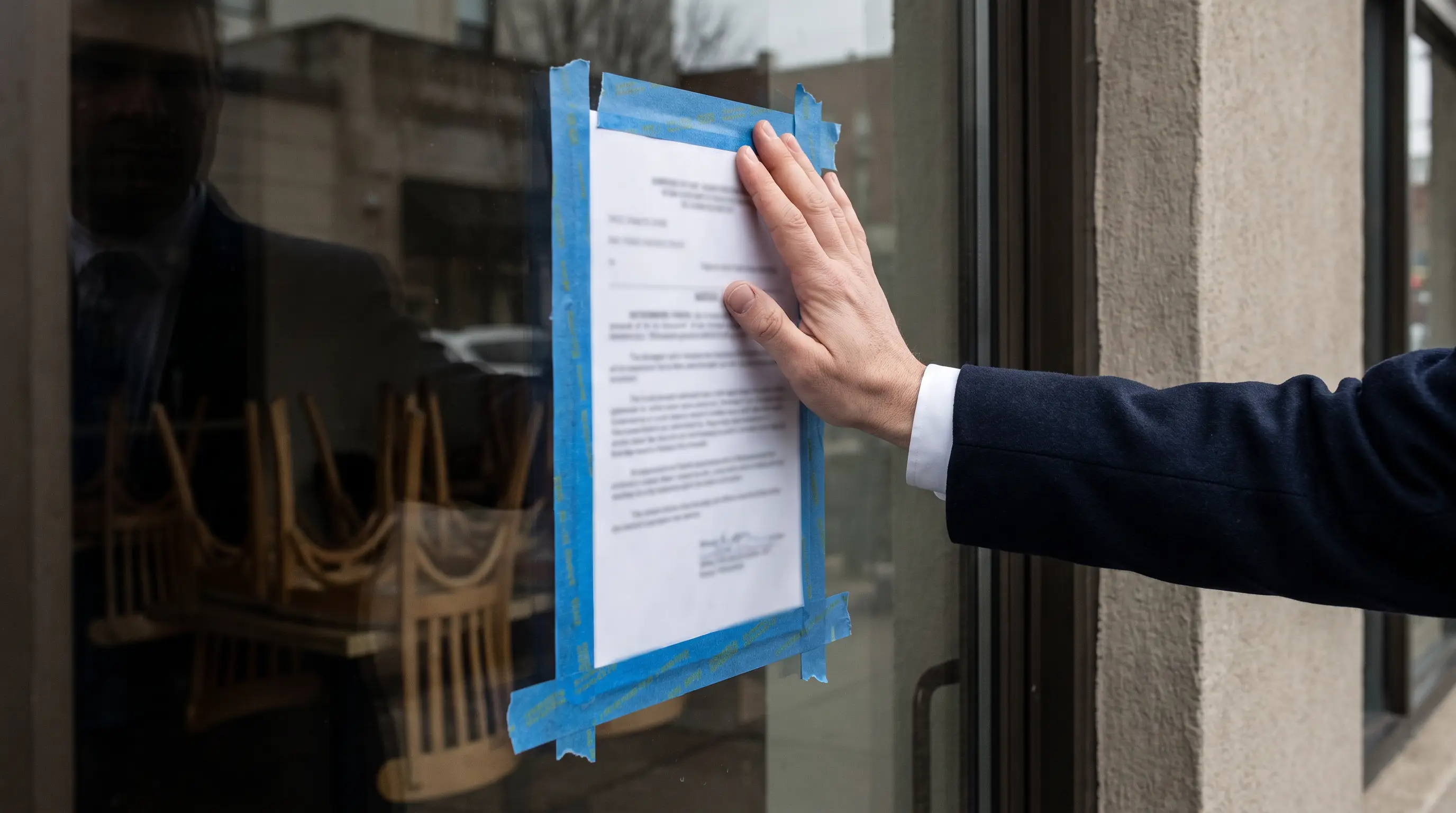
Your commercial tenant is two months behind on rent. Every month the space stays occupied without payment, you lose money, and you may be covering taxes, insurance, and a mortgage on your own. When you search for help, the internet is full of eviction rules, but most of them are written for residential tenants and simply do not apply to you.
Commercial evictions in California follow their own rules. This guide explains how the commercial unlawful detainer process actually works, how long it realistically takes, and where landlords most often undermine their own cases before they ever reach a courtroom.
An unlawful detainer is the court proceeding California uses to evict a tenant. When people search for "eviction," the legal action they are looking for is an unlawful detainer, governed primarily by California Code of Civil Procedure sections 1159 through 1179a. It is a fast-track lawsuit focused on one main question: who has the right to possess the property.
Yes. Commercial evictions involve far fewer statutory tenant protections, and the lease itself controls much more of the process.
Key differences at a glance:

One caution: commercial tenants are not entirely without statutory protection. Since January 1, 2025, California law (SB 1103) has given certain small businesses, restaurants, and nonprofits, known as "qualified commercial tenants," new protections around rent increase notices and operating cost pass-throughs. If your tenant may qualify, have that reviewed before you act.
The commercial unlawful detainer process generally follows these steps.
For nonpayment, the starting point is usually a three-day notice to pay rent or quit under Cal. Code Civ. Proc. § 1161(2). The notice must state the amount due and provide the payment information required by statute. The statutory period excludes Saturdays, Sundays, and judicial holidays.
The lease must also be reviewed carefully. A commercial lease may require:
In a commercial case, actual receipt may not cure failure to follow a lease-prescribed service method. See Culver Center Partners E. No. 1, L.P. v. Baja Fresh Westlake Vill., Inc., 185 Cal. App. 4th 744, 749–52 (2010).
Commercial landlords have a statutory option that does not apply in the same manner to ordinary residential tenancies. Under Cal. Code Civ. Proc. § 1161.1(a), a notice may state an estimated amount if the notice clearly identifies the amount as an estimate and the estimate is reasonable.
The statute provides a presumption that the amount was reasonably estimated when the amount stated is no more than 20 percent more or less than the amount ultimately determined to be due. Cal. Code Civ. Proc. § 1161.1(e).
The estimate should be supported by the landlord’s records and lease analysis. A landlord should not use the estimate provision to demand amounts that are not authorized by the lease or to inflate the amount needed to cure the default.
California authority also recognizes that a notice may include amounts due under the lease, not only base rent, when the lease makes those amounts payable. See Canal-Randolph Anaheim, Inc. v. Wilkoski, 78 Cal. App. 3d 477, 492 (1978). Whether a particular charge may be included remains a lease-specific question.
Commercial landlords should handle partial payments with particular care.
Under Cal. Code Civ. Proc. § 1161.1(b), if the landlord accepts a partial payment after serving the notice, the landlord may proceed with an unlawful detainer without serving a new notice and may seek the difference between the amount demanded in the notice and the amount actually received. The complaint should state the original amount demanded, the payment received, and the remaining balance.
The landlord should document the payment and avoid communications suggesting that the default has been fully cured or that the tenancy has been reinstated. The lease and the statute should both be reviewed before accepting or depositing a check.
If partial rent is accepted after the complaint has been filed, Cal. Code Civ. Proc. § 1161.1(c) provides that acceptance is evidence only of the payment and does not waive the parties’ rights or defenses. The landlord may amend the complaint to reflect the payment, but this protection applies only if the landlord gives the tenant actual notice that acceptance does not waive any rights, including the right to recover possession.
This commercial rule should not be assumed to apply to residential tenancies. In a residential case, acceptance of rent after service of a notice may waive or undermine the notice depending on the facts, the amount accepted, the parties’ communications, and any reservation of rights. Residential landlords should not rely on Cal. Code Civ. Proc. § 1161.1 as a general safe harbor.
If the tenant does not pay or vacate by the applicable deadline, the landlord may file an unlawful detainer complaint in the superior court for the county where the property is located.
The complaint must be verified and must state the facts supporting possession. In a nonpayment case, it must state the amount of rent in default and the method used to serve the notice. Cal. Code Civ. Proc. § 1166(a).
The landlord should confirm before filing that:
The summons and complaint must be properly served. Service defects can delay the case or result in dismissal.
The tenant’s response deadline depends on the manner of service. The landlord should calculate the deadline under Cal. Code Civ. Proc. § 1167 rather than assume that every tenant has the same number of days to respond.
If the tenant does not respond, the landlord may seek entry of default and a default judgment, subject to proper service and compliance with the applicable procedural requirements.
If the tenant responds, the parties may litigate motions, discovery, and trial issues permitted in the proceeding. Unlawful detainer matters receive statutory priority over ordinary civil cases. Cal. Code Civ. Proc. § 1179a.
Actual trial timing varies by county, court calendar, service issues, motions, continuances, and the complexity of the defenses. A landlord should not promise a particular trial date or time to judgment.
If the landlord prevails, the court may enter judgment for possession and may award rent and damages proved at trial. Cal. Code Civ. Proc. § 1174(b).
The landlord then obtains a writ of possession. The sheriff serves the required notice and, if the tenant remains after the notice period, enforces the writ. The landlord should not change the locks, remove property, shut off utilities, or otherwise attempt to retake possession without following the lawful process.
Most problems in commercial eviction cases arise before filing. Common issues include the following.
A notice that demands the wrong amount, includes charges not recoverable under the lease, omits required payment information, or fails to comply with the lease’s notice provisions can defeat the action. A valid three-day notice is a prerequisite to a nonpayment unlawful detainer. See Bevill v. Zoura, 27 Cal. App. 4th 694, 697 (1994).
A landlord’s acceptance of rent can create waiver issues. Commercial landlords have statutory protection for partial payments under Cal. Code Civ. Proc. § 1161.1(b), but the protection is specific. The landlord should identify the payment, credit it correctly, preserve the remaining balance, and provide the required notice when payment is accepted after filing.
Residential landlords should not assume that the same rule applies to residential premises.
Changing the locks, shutting off utilities, removing property, or using force to retake possession can expose a landlord to liability. Cal. Code Civ. Proc. § 1159 addresses forcible entry, and other claims may arise depending on the conduct. The safer course is to obtain a judgment and have the sheriff enforce a writ of possession.
A lease may require a preliminary default notice, a longer cure period, a specific delivery method, or another precondition to litigation. Skipping a contractual step can create a defense even if rent is unpaid. See Culver Center Partners E. No. 1, L.P. v. Baja Fresh Westlake Vill., Inc., 185 Cal. App. 4th 744, 749–52 (2010).
A landlord should distinguish base rent, additional rent, operating expenses, late charges, attorneys’ fees, utilities, taxes, and other amounts. Whether a particular charge may be demanded in a three-day notice depends on the lease and applicable law. A notice that includes an unsupported amount may be vulnerable to challenge.
A personal guaranty may provide an important collection remedy, but it should be reviewed early. The landlord should confirm the scope of the guaranty, notice provisions, limitations, exhaustion requirements, and any separate notice required to the guarantor.
Commercial tenants generally cannot rely on the habitability defenses available to residential tenants, but landlords should still expect a response. Common defenses include a defective notice, waiver because the landlord accepted rent, failure to follow lease procedures, improper service, and claims that the landlord breached the lease first, for example by failing to make required repairs. A well-prepared case anticipates these issues before filing.
How long does a commercial eviction take in California?
There is no uniform timetable. An uncontested case may proceed faster than a contested case, but the time depends on notice, service, court scheduling, motions, trial availability, judgment processing, and sheriff enforcement.
Can I lock out a commercial tenant who hasn't paid rent?
Not without serious risk. Self-help lockouts or utility shutoffs can expose a landlord to liability under California's forcible entry and detainer laws. The safer course is to obtain a judgment and have the sheriff enforce a writ of possession.
Do I have to give a commercial tenant 3 days' notice?
California law generally requires at least a 3-day notice to pay rent or quit, excluding weekends and judicial holidays. Many commercial leases require a longer notice period or a cure opportunity, and those lease terms must also be followed.
Can I accept a partial payment after serving the notice?
For commercial real property, potentially yes. Under Cal. Code Civ. Proc. § 1161.1(b), accepting a partial payment after service of the notice does not necessarily waive the landlord’s right to pursue an unlawful detainer for the remaining balance. The landlord should accurately credit the payment and identify the remaining amount in the complaint.
If the payment is accepted after filing, the landlord must provide actual notice that acceptance does not waive rights, including the right to recover possession, to rely on the protection in Cal. Code Civ. Proc. § 1161.1(c).
Residential landlords should not rely on this commercial rule. Acceptance of rent in a residential case may waive or undermine the notice depending on the circumstances.
Can I sue for unpaid rent and evict at the same time?
An unlawful detainer may seek possession and amounts properly recoverable in that proceeding, including rent due and certain damages. Cal. Code Civ. Proc. § 1174(b).
Claims for future rent, broader contract damages, or other relief may require a separate civil action or different procedural treatment. The landlord should analyze claim-splitting, jurisdiction, damages, and lease provisions before filing.
Do COVID-era eviction protections still apply to commercial tenants?
Generally no. Statewide COVID-era eviction protections focused on residential tenants and have expired, and most local commercial protections have also ended. Landlords should still confirm whether any local rules apply.
Related reading: Real Estate Agent Fiduciary Duties in California; Structuring Co-Ownership in California; Easement Disputes: A California Property Owner Guide.
Tyler Law represents commercial landlords throughout Riverside County, Orange County, and California in unlawful detainer actions and lease disputes. We also review commercial leases before problems start, so notice, cure, and guaranty provisions work for you when you need them. Contact our office to schedule a consultation.
This article is for general informational purposes only and is not legal advice. Reading it does not create an attorney-client relationship. Eviction procedures depend on your lease and specific facts; consult an attorney about your situation. Attorney Advertising.
Riverside County: (951) 600-2733
Orange County: (714) 978-2060
Northwest Arkansas: (479) 377-2059
October 22, 2026
When a Commercial Tenant Stops Paying: A California Landlord's Guide to Unlawful DetainerEvicting a commercial tenant in California follows different rules than residential eviction. The step-by-step process and the mistakes that cost landlords.
August 21, 2026
Failure to Disclose a Home Defect in California: Seller Liability, ExplainedCalifornia sellers must disclose known material defects — even in an as-is sale. What the TDS requires, what buyers can recover, and how nondisclosure disputes like an undisclosed pool leak play out.
August 4, 2026
When Insurance Kills the Deal: Wildfire Coverage, Disclosure Duties, and Agent Liability in 2026Wildfire insurance is now a deal-critical issue in California transactions. What agents and brokers must disclose, where liability risk is growing, and how to protect your clients — and yourself — in 2026.


