March 16, 2026
You closed on a home, moved in, and within weeks discovered something significant the seller never mentioned — a leak that had been patched repeatedly, a foundation crack hidden by a bookcase, a permit issue with the addition. Now you have a problem the seller almost certainly knew about, and you want to know what to do.
This article walks through what California sellers are required to disclose, what remedies a buyer may have, important aspects of the timeline, and certain practical steps that can be taken in the first 30 days after discovery of an issue.
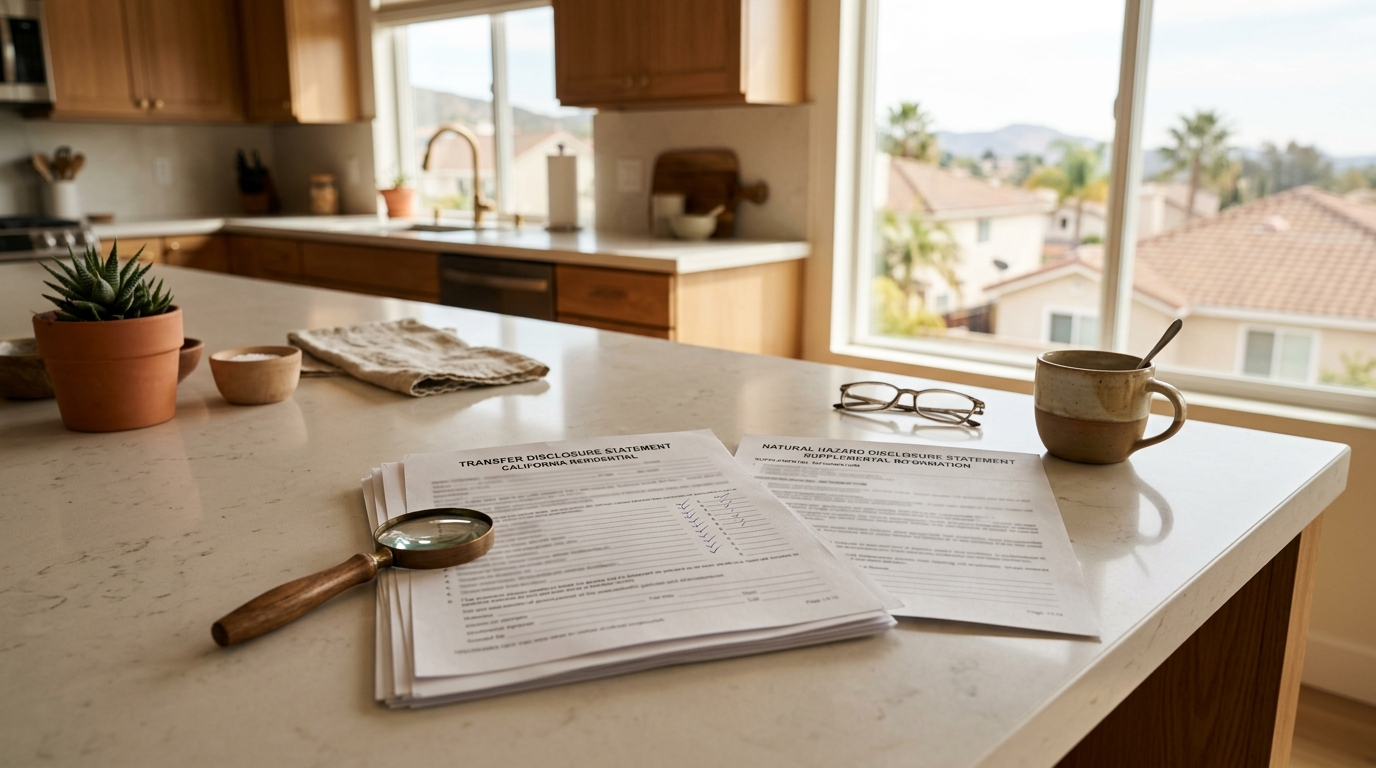
California has one of the most extensive seller disclosure regimes in the country. Two important documents related to disclosure in residential real property transactions are:
Beyond these disclosures, sellers must disclose any material fact known to them that affects the value or desirability of the property. This is broader than the TDS itself. Courts have applied it to issues like neighborhood nuisances, prior unresolved disputes with neighbors, prior unpermitted work, and recurring water intrusion.
A seller is not liable for what they genuinely did not know. But "I didn't think it mattered" is rarely a defense for an issue a reasonable buyer would find material about or would materially impact the desirability of the property.
A listing agent has independent disclosure obligations, including a duty to conduct a reasonably competent visual inspection of accessible areas and disclose any material facts that inspection reveals.
A buyer's agent has parallel duties to the buyer. If your agent knew of an issue and didn't disclose it, that can also be actionable.
(For more on this, see our companion article on Realtor Fiduciary Duties.)
California courts have allowed buyers who can prove fraudulent or negligent nondisclosure to recover:
The measure of damages is the subject of significant case law. A general framework is that you are entitled to be put in the position you would have been in had the truth been disclosed.
Several limitations periods can apply, and they run from different events:
Discovery rules can extend a deadline that has facially expired, but those rules are fact-intensive. The practical takeaway: don't sit on the issue. The longer you wait, the harder the case gets.
A few specific steps preserve your options:
Many disclosure disputes don't go to trial and settle after a demand letter has been issued and once the seller's counsel sees the documentation. Any demand letter should be grounded in the right legal theory and supported by documented evidence, or it risks accomplishing nothing.
If the issue is significant — typically more than $10,000 in repair cost or a diminished value claim — it's worth a consultation with an attorney early, before you make repair decisions that could affect the case.
What must a seller disclose in California?
California Civil Code §1102, et seq., requires a Transfer Disclosure Statement on most residential sales of one to four units. Beyond that, sellers must disclose any material fact known to them that affects the value or desirability of the property — including issues outside the four corners of the property, like neighborhood disputes, neighbor nuisances, or prior unpermitted work.
What if my real estate agent missed something they should have caught?
California real estate licensees have an independent statutory duty to conduct a reasonably competent visual inspection and disclose what it reveals. If your agent breached that duty and you were harmed, that's a separate potential claim from the seller's nondisclosure.
How long do I have to sue for nondisclosure in California?
Generally three years from discovery for fraud-based claims, four years from breach for written contract claims. Other limitations periods may apply depending on the theory. Don't wait — earlier action gives you more options and stronger evidence.
What damages can I recover?
Typically the cost of repair or diminution in value, consequential damages caused by the nondisclosure, and attorneys' fees to the prevailing party if the purchase contract specifies. Punitive damages may be available in cases of intentional fraud.
If you're dealing with a possible nondisclosure issue, our real estate attorneys regularly handle these cases throughout Riverside County. Schedule a consultation for a focused review of your facts.
This article is for general informational purposes and does not constitute legal advice. No attorney-client relationship is formed by reading this article. For advice on your specific situation, consult a licensed California attorney.
{
"@context": "https://schema.org",
"@type": "FAQPage",
"mainEntity": [
{
"@type": "Question",
"name": "What must a seller disclose in California?",
"acceptedAnswer": {
"@type": "Answer",
"text": "California Civil Code §1102, et seq., requires a Transfer Disclosure Statement on most residential sales of one to four units. Beyond that, sellers must disclose any material fact known to them that affects the value or desirability of the property — including issues outside the four corners of the property, like neighborhood disputes, neighbor nuisances, or prior unpermitted work."
}
},
{
"@type": "Question",
"name": "What if my real estate agent missed something they should have caught?",
"acceptedAnswer": {
"@type": "Answer",
"text": "California real estate licensees have an independent statutory duty to conduct a reasonably competent visual inspection and disclose what it reveals. If your agent breached that duty and you were harmed, that's a separate potential claim from the seller's nondisclosure."
}
},
{
"@type": "Question",
"name": "How long do I have to sue for nondisclosure in California?",
"acceptedAnswer": {
"@type": "Answer",
"text": "Generally three years from discovery for fraud-based claims, four years from breach for written contract claims. Other limitations periods may apply depending on the theory. Don't wait — earlier action gives you more options and stronger evidence."
}
},
{
"@type": "Question",
"name": "What damages can I recover?",
"acceptedAnswer": {
"@type": "Answer",
"text": "Typically the cost of repair or diminution in value, consequential damages caused by the nondisclosure, and attorneys' fees to the prevailing party if the purchase contract specifies. Punitive damages may be available in cases of intentional fraud."
}
}
]
}
Riverside County: (951) 600-2733
Orange County: (714) 978-2060
Northwest Arkansas: (479) 377-2059
August 21, 2026
Failure to Disclose a Home Defect in California: Seller Liability, ExplainedCalifornia sellers must disclose known material defects — even in an as-is sale. What the TDS requires, what buyers can recover, and how nondisclosure disputes like an undisclosed pool leak play out.
August 4, 2026
When Insurance Kills the Deal: Wildfire Coverage, Disclosure Duties, and Agent Liability in 2026Wildfire insurance is now a deal-critical issue in California transactions. What agents and brokers must disclose, where liability risk is growing, and how to protect your clients — and yourself — in 2026.
May 21, 2026
C.A.R.’s 2026 Spring Business Meetings: Key Takeaways for Brokers & AgentsC.A.R.’s 2026 Spring Business Meetings: new MLS seller-concession and listing-photo rules, transaction coordinator standards, AI compliance, and DRE enforcement for California brokers and agents.


